China has become a significant source of Eco-Friendly Roofing Tiles for residential, commercial, and industrial projects worldwide. Manufacturers now combine recycled materials, low-carbon production methods, and modern surface technology. These products can reduce material waste while supporting durable roof construction. Yet environmental claims should never be accepted without evidence.
Experienced buyers examine more than appearance and price. They review raw material sources, water absorption, freeze-thaw resistance, fire performance, and expected service life. A reliable manufacturer should provide test reports, factory certifications, installation guidance, and clear product specifications. Factory visits can reveal important details, including storage conditions, quality-control procedures, and the consistency of tile dimensions.
Some Chinese manufacturers produce lightweight polymer, recycled composite, fiber cement, and solar-compatible roofing solutions. Each option suits different climates and building designs. A coastal project may need stronger corrosion resistance. A cold region may demand excellent frost resistance. Roof pitch, local weather, and structural loading also influence the final choice.
Performance matters most.
This market is not perfect. Some suppliers use broad sustainability language without explaining measurable results. Others offer attractive samples but inconsistent batch quality. Careful comparison remains necessary. Buyers should request independent testing, verified production records, and references from completed projects. Transparent communication builds confidence, especially when custom colors, profiles, or packaging are required. With practical evaluation and responsible sourcing, China’s leading manufacturers can provide roofing tiles that balance durability, environmental consideration, and long-term value.
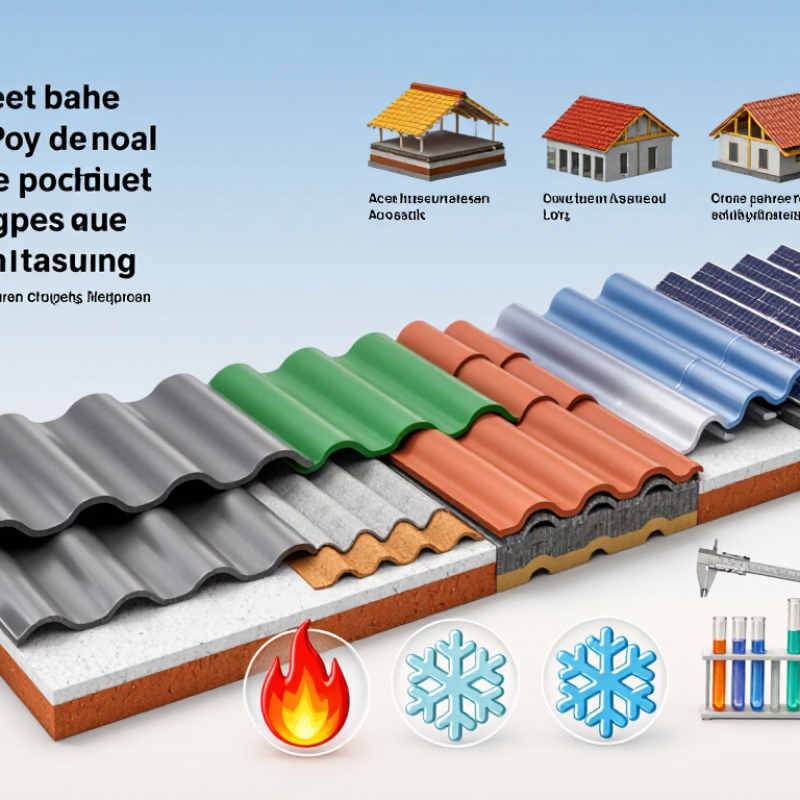
Eco-friendly roofing tiles begin with responsible material choices. Manufacturers may use recycled clay, reclaimed concrete, or mineral-rich materials from controlled sources. The key is not the label. It is the full life cycle. Durable tiles can remain on a roof for decades, reducing replacement waste and transport emissions. During factory visits, buyers should ask about raw material testing, kiln efficiency, and production waste recovery.
Energy use also matters. Modern kilns can lower fuel consumption through insulation, heat recovery, and carefully managed firing temperatures. Some facilities reuse process water and return broken tiles to the production line. These details are measurable. Ask for test reports, environmental product declarations, or factory inspection records. Vague green claims deserve caution.
Roof performance shapes sustainability after installation. Light-colored surfaces may reduce heat absorption in warm climates, while properly fitted tiles can improve ventilation beneath the roof. Rainwater runoff should also be considered, especially when coatings or sealants are used. Safer, longer-lasting finishes are preferable to coatings that peel quickly. No tile is perfectly green. A heavier tile may last longer but require more transport energy. A recycled tile may save raw materials but still need energy-intensive processing. Responsible manufacturers explain these trade-offs instead of hiding them.
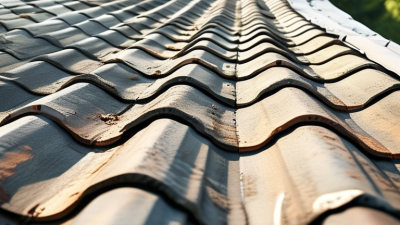
Sustainable roofing tile production starts with material choices, not marketing claims. Clay remains valuable because it is abundant, durable, and recyclable after demolition. Manufacturers can also blend recycled ceramic waste into new tiles, reducing virgin mineral demand. However, firing clay requires substantial heat. The balance is not perfect.
Concrete tiles typically use cement, sand, water, and mineral pigments. Recycled aggregates can replace part of the virgin sand or stone. The U.S. Environmental Protection Agency reported that construction and demolition activities generated about 600 million tons of debris in 2018. More than 455 million tons were recovered. This suggests a practical supply stream for secondary tile materials, although contamination remains a concern.
Recycled polymers offer another route. They can create lightweight tiles with lower transport loads and reduced breakage. Yet their durability, fire performance, and end-of-life recovery need careful testing. Poorly selected additives may weaken long-term environmental performance. The United Nations Environment Programme reported that buildings produced 37% of global energy and process-related carbon emissions in 2022. Roofing materials cannot solve this alone, but lighter tiles, recycled inputs, and lower-temperature processing can reduce pressure across the product life cycle. Reliable manufacturers should verify these claims through life-cycle assessments, product declarations, and transparent factory data. Some results still depend on local energy sources. That limitation deserves honesty.
China’s leading eco-friendly roofing tile manufacturers are responding to stricter green-building expectations. The 2023 Global Status Report for Buildings and Construction, published by UNEP, states that buildings consume about 32% of global energy and create 34% of global carbon emissions. Roofing materials therefore deserve closer scrutiny, not broad environmental claims.
Experienced Chinese manufacturers now assess recycled content, firing temperature, water absorption, freeze-thaw resistance, and expected service life. Ceramic tiles may use mineral-rich local inputs, while concrete tiles can incorporate controlled industrial by-products. However, recycled content alone proves little. A tile with poor durability may create more replacement waste. This point is often overlooked.
Look beyond samples. Request laboratory reports, production traceability, and environmental product declarations when available. ISO 14001 certification can support environmental management, but it does not guarantee a low-impact product. The International Energy Agency reports that buildings account for roughly 30% of global final energy use, making material efficiency increasingly important. Chinese suppliers serving serious projects should also explain packaging reduction, pallet reuse, wastewater treatment, and quality control at each production stage. Small details matter. Buyers should compare technical data under equivalent standards, because attractive catalog figures can hide testing differences. Industry experience suggests that the best supplier is not always the cheapest; it is the one that documents performance consistently and admits where improvement is still needed.
Clay, concrete, metal, and fiber-cement roofing products are widely used lower-impact alternatives because of their durability and potential for long service life. The ranges shown are general industry benchmarks in years, not manufacturer or brand claims. Actual performance depends on climate, installation quality, maintenance, and product specifications.
Reference basis: publicly available roofing life-expectancy guidance from building-material and home-inspection organizations.
Chinese manufacturers produce eco-friendly roofing tiles by combining recycled minerals, low-carbon binders, and controlled firing processes. Some factories use crushed construction waste, reclaimed ceramic powder, or industrial mineral residues. Materials are screened, weighed, and blended before forming. Moisture content matters. During pressing, automated equipment controls thickness and edge shape. Kiln temperature is monitored through digital sensors. This reduces warping and unnecessary energy use. However, recycled materials can vary between batches. That difference deserves careful control.
Quality teams inspect each production batch before shipment. Samples are measured for thickness, weight, water absorption, and dimensional accuracy. Water absorption tests show whether tiles resist heavy rain and long-term dampness. Freeze-thaw cycles reveal weaknesses in colder regions. Load testing checks whether tiles can withstand installation pressure and wind-related stress. Surface tests examine color retention and coating adhesion. Independent laboratories may verify strength, fire performance, and environmental data. Test records should identify the batch, date, equipment, and results.
Environmental testing can include checks for harmful substance release from recycled inputs. Manufacturers also calculate material use, fuel consumption, and production waste. Some recover broken tiles and return them to the mixing process. Packaging may use recycled paper and reduced plastic protection. Yet greener production is not automatically better if service life becomes shorter. Small shade differences may appear in tiles containing reclaimed materials. Durability, maintenance needs, and transport distance require honest comparison. Factory audits and traceable test reports help buyers judge these details with greater confidence.
| Production or Testing Dimension | How Green Roofing Tiles Are Commonly Produced | Typical Material or Process Data | Relevant Test or Verification | Environmental Significance |
|---|---|---|---|---|
| Primary Raw Materials | Manufacturers generally use natural clay for fired tiles or cement, sand, mineral aggregates, pigments, and water for concrete tiles. | Clay and mineral-based products are inorganic and durable; the exact formulation varies by tile type. | Review the technical data sheet, safety data sheet, and material composition declaration. | Natural mineral materials generally have low chemical emissions during normal service life. |
| Recycled Material Use | Production scrap and unfired clay waste may be crushed and returned to the raw-material process when quality requirements permit. | Recycled-content percentages are product-specific and should not be assumed without a supplier declaration. | Verify the percentage through a recycled-content statement, bill of materials, or third-party audit. | Reusing process waste reduces landfill disposal and demand for virgin mineral inputs. |
| Forming and Moulding | Clay is commonly extruded or pressed and then dried; concrete mixtures are proportioned, moulded, compacted, and cured. | Automated moulding helps control profile, interlocking geometry, thickness, and dimensional consistency. | Dimensional checks normally cover length, width, thickness, squareness, profile, and interlock fit. | Accurate profiles reduce breakage, installation waste, and the need for replacement tiles. |
| Drying and Moisture Control | Fired clay tiles are dried before kiln firing; concrete tiles are cured under controlled moisture and temperature conditions. | Controlled drying helps limit warpage, cracking, and uneven shrinkage. | Factories monitor moisture content, drying time, visible defects, and dimensional stability. | Lower defect rates conserve raw materials and reduce energy used for reprocessing. |
| Firing or Cement Curing | Clay tiles are fired in industrial kilns; concrete tiles harden through cement hydration, with some facilities using controlled or accelerated curing. | Clay roof-tile firing commonly occurs at approximately 900–1,100 °C, depending on the clay body and product design. | Kiln temperature profiles, curing conditions, compressive or breaking strength, and appearance are monitored. | Energy-efficient kilns, heat recovery, and optimized firing schedules can reduce energy consumption per tile. |
| Surface Finish and Coatings | Tiles may be left natural or receive mineral-based engobes, glazes, acrylic coatings, or protective surface treatments. | Coating composition, thickness, color stability, and weathering performance vary by product. | Check adhesion, abrasion resistance, color change, water absorption, and weathering performance where applicable. | Low-VOC or mineral-based finishes can reduce emissions, but coating claims require product-specific evidence. |
| Water Impermeability | Manufacturers adjust density, firing, curing, and surface treatment to limit water penetration while maintaining vapor behavior. | Performance depends on tile design, porosity, surface finish, laps, and installation details. | Clay tiles are commonly assessed using water-impermeability methods such as EN 539-1; applicable standards depend on the market. | Better resistance helps reduce moisture damage and extend roof service life. |
| Freeze–Thaw Resistance | Raw-material selection, controlled porosity, adequate curing, and suitable firing help tiles withstand repeated freezing and thawing. | Clay roof tiles may be classified by freeze–thaw resistance under EN 539-2, including 30-, 90-, or 150-cycle categories. | Laboratory specimens are exposed to repeated freezing and thawing and inspected for damage. | Longer service life reduces replacement materials, transport, and construction waste. |
| Mechanical Strength | Compaction, firing, cement formulation, aggregate grading, and curing are controlled to achieve the required load performance. | Required breaking-load values depend on tile profile, dimensions, national code, and intended installation. | Clay tiles may be tested using EN 538; concrete products are tested against the relevant product standard and project specification. | Strong, durable tiles are less likely to break during transport, installation, or maintenance. |
| Fire Performance | Uncoated clay and concrete tiles are manufactured primarily from inorganic mineral materials. | Many mineral-based roof tiles can achieve high reaction-to-fire performance, subject to composition and certification. | Verification may use EN 13501-1 or the applicable local fire-classification standard. | High fire resistance can improve building safety and reduce dependence on additional fire-protection materials. |
| Dimensional Quality Control | Automated inspection and sampling checks identify cracks, warpage, pinholes, color variation, chipped edges, and fitting problems. | Acceptance limits should be defined in the purchase specification and applicable product standard. | Use batch records, inspection reports, sampling plans, and calibration records for measuring equipment. | Consistent quality reduces installation delays, rejected batches, and material waste. |
| Packaging and Transport | Tiles are commonly stacked on pallets and protected with strapping, separators, cartons, or stretch film to minimize breakage. | Packaging materials may include wood, paper-based board, plastic film, and metal or polymer straps. | Check packaging strength, pallet stability, moisture protection, and the percentage of recyclable packaging. | Recyclable packaging and optimized pallet loading can reduce packaging waste and transport emissions. |
| Environmental Management | More advanced facilities monitor electricity, fuel, water, kiln emissions, solid waste, and process-material recovery. | Environmental performance is site-specific and should be reported per production output, such as energy per tonne or per square metre. | Evidence may include ISO 14001 certification, energy records, emissions monitoring, waste-transfer records, and environmental permits. | Documented environmental management makes sustainability claims more measurable and auditable. |
| Note: Actual performance values depend on the tile material, profile, coating, production batch, applicable national standard, and installation system. Buyers should request product-specific test reports and declarations rather than relying only on general environmental claims. | ||||
A sustainable roofing tile supplier should provide evidence, not attractive promises. The UNEP 2024 Global Status Report states that buildings consumed 32% of global energy and produced 34% of energy-related carbon emissions in 2022. Roofing choices matter, although tiles alone cannot solve this problem. Ask for verified Environmental Product Declarations under ISO 14025 and EN 15804. Check recycled content, manufacturing energy, transport distance, and expected service life.
Factory experience is equally important. Request recent test reports for water absorption, freeze-thaw resistance, wind load, and breaking strength. A reliable supplier should explain testing methods and production controls clearly. Visit the factory if possible. Look at storage areas, kiln management, quality records, and packaging waste. Samples should be tested independently, not only photographed. Small details often reveal larger weaknesses.
Roof color and surface reflectance also deserve attention. The U.S. Department of Energy reports that reflective roofing can reduce cooling demand, especially in hot climates, but results depend on insulation, ventilation, and local weather. This is where supplier claims need careful review. A tile may contain recycled material yet require energy-intensive firing. My own evaluation would compare the full life cycle, not one impressive percentage. Some suppliers may lack complete carbon data. That is not automatically disqualifying, but it requires honest disclosure and a written improvement plan.